
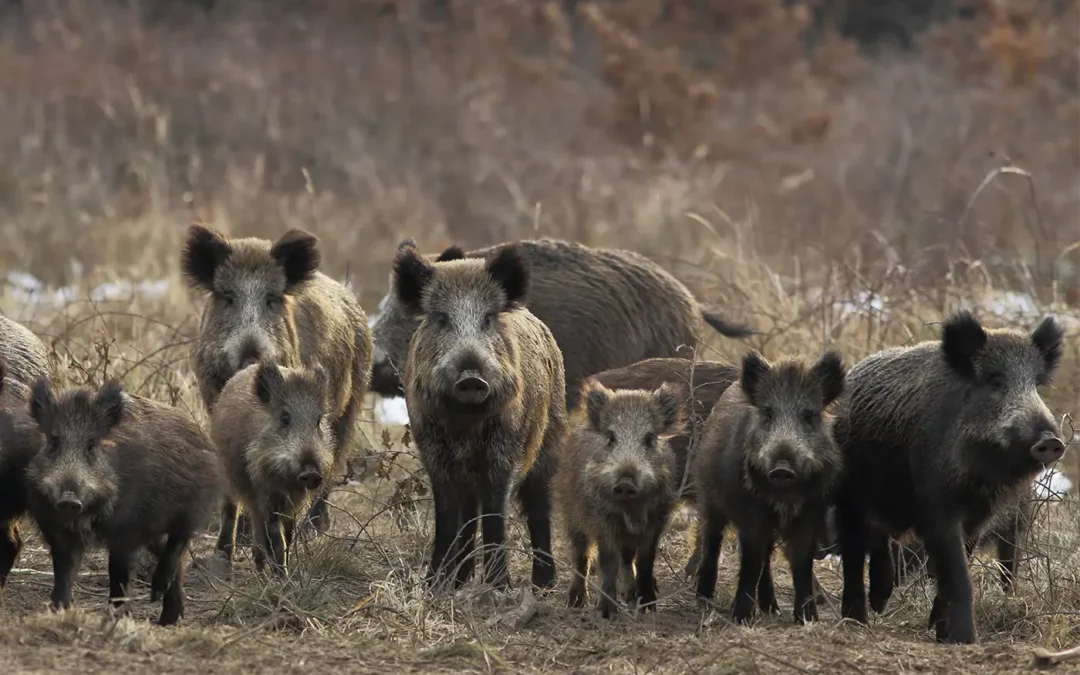
The number of Spanish wild boar that got infected with African Swine Fever (ASF) is likely to grow. Apart from the initial 2 confirmed findings, another 12 dead wild boar have emerged over the weekend. Tests will have to provide clarity. As a result of the initial finding, many countries outside the EU have closed their borders for Spanish pork.
Spanish newspaper La Vanguardia, published in Barcelona, wrote that in total 14 dead wild boar have been found, of which 2 on Friday (confirmed positive), 4 on Saturday and 8 on Sunday. The newspaper quotes sources from within the government of Catalonia, saying the 8 new carcasses were found near the town Cerdanyola del Vallès, in the direct vicinity of the 2 findings on Friday.
Major consequences for Spain’s pork exports
The outbreak of ASF has major consequences for Spain’s pork export possibilities. News agency Reuters quoted Luis Planas, Spain’s minister for Agriculture, Fisheries and Food. At a press conference, he said, “Of the 400 export certificates to 104 countries, a third are blocked. We are working to open them as quickly as possible.” He said the total value of Spain’s pork exports amounts to €8.8 billion.
In total almost 40 countries, have closed their borders for Spanish pork and pork products. Amongst those are e.g. Brazil, Canada, Chile, Colombia, Costa Rica, Cuba, Ecuador, the United States, the Philippines, Japan, Mexico, Peru, Russia, South Africa, Thailand, Uruguay and Venezuela.
Regionalisation in Europe, China and South Korea
In total, the EU imports 58% of all pork coming from Spain (worth €5.1 million, according to minister Planas). Inside the EU, regionalisation agreements apply, meaning that only farms in a 20 km radius around the outbreaks will have to cease their activities – for the rest trade can continue as normal.
In addition, China and South Korea have also agreed on regionalisation principles with Spain, which means that only exports from the affected province is banned. That is still substantial as the outbreaks have taken place in Catalonia, Spain’s number #1 pork producing area with about 5,000 pig farms.
Nevertheless, the recent deal with China is vital. La Vanguardia calculated that Spain exported 540,000 tons of pork to China alone in 2024, which came down to a value of €1.1 billion. Often this comes down to pig products not sold in the EU, think of offal and bones.
Òscar Ordeig is the minister of agriculture, livestock and fisheries in Catalonia. He said that for Catalonia, the outbreak does have repercussions as “over a 100 countries worldwide would have blocked access to pork from Catalonia,” and it will cost a great deal of effort to have those markets all reopened.
We will have to see how we can manage the situation so that the social, economic, ecological and other impacts are minimised
ASF in Spain: “A very serious issue”
La Vanguardia also spoke to Prof Christian Gortázar at the University of Castilla-La Mancha, located in Ciudad Real, and he called Spain the third-largest exporter of pork products in the world.
Speaking about the effects of the outbreak, he said, “First, we lose our status as a country free of ASF, and that is a very serious issue because we have an extremely important pork industry that, among other things, generates around 300,000 direct and indirect jobs, many of them in rural areas. Therefore, the potential economic impact is enormous. From there, we will have to see how we can manage the situation so that the social, economic, ecological and other impacts are minimised.”
Measures to keep ASF under control
The Catalan authorities have decided to do everything that is in their power to make sure that the virus does not spread any further. Minister Ordeig announced the use of traps to capture the wild boar, to apply repellents and fences to prevent animals from moving to other areas and he ordered the closure of the natural area to the general public as from Sunday, November 30. Perhaps the army will assist to enforce that nobody will access the area.
The outbreaks have taken place relatively close to the Bellaterra Campus of the Universitat Autònoma de Barcelona (UAB), which is well known in the pig production business. So far, the outbreaks do not affect daily activities there.
With regard to the origin of the outbreak, Ordeig considered it “very likely” that the outbreak of ASF originated from contaminated food left in bins or garbage containers where an animal rummaged through it.