
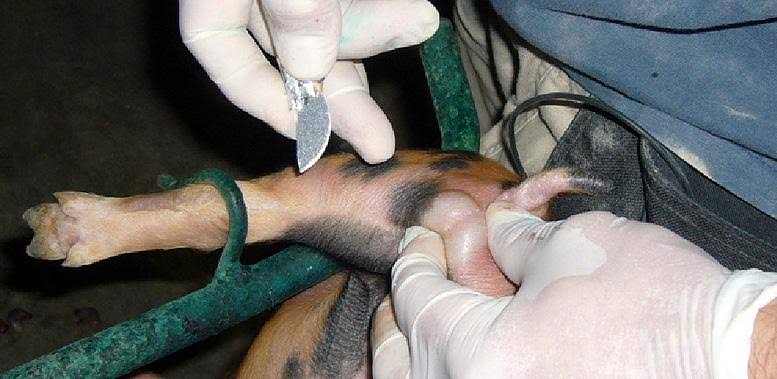
In recent years, animal welfare regulations and administrative court rulings in both Belgium and the Netherlands have focused heavily on enforcing stricter limits regarding physical interventions on livestock, particularly piglet castration and tail docking.
The Netherlands
Routine Tail Docking Rulings
Legal Context: Under EU Directive 2008/120/EC and the Dutch Animals Act (Wet dieren), the routine docking of pig tails is explicitly prohibited. Tail docking is legally permitted only as an absolute last resort when non-mutilative measures (such as enrichment material and climate adjustments) fail to control tail biting.
Court & Administrative Actions: Dutch NGOs (such as Varkens in Nood) have repeatedly taken the Dutch state (Ministry of Agriculture and the NVWA inspection authority) to court to enforce a strict phase-out. Dutch courts have consistently ruled that administrative bodies must actively monitor and enforce compliance rather than granting indefinite, automatic exemptions.
Current Outcome: Dutch administrative court decisions have forced the state and industry sectors into binding agreements to completely phase out tail docking by 2030, requiring pig farmers to demonstrate documented steps toward raising intact pigs.
Surgical Castration Limitations
Legal Context: The Netherlands voluntarily phased out unanesthetized piglet castration years ahead of general EU rules through sector agreements (the Noordwijk Declaration).
Enforcement: Judicial and administrative reviews enforce strict requirements: surgical castration can only be performed under local or general anesthesia (typically using CO₂ or Isoflurane) with prolonged analgesia, with market incentives favoring intact males (boars) or immunocastration (vaccination).
Belgium
Castration Litigation & Practitioner Restrictions
Legal Context: Historically, Belgian legislation required a licensed veterinarian to perform surgical interventions on animals. However, legislative shifts in 2023 attempted to allow farmers to perform surgical castration of young piglets themselves.
Court Rulings: Animal rights organizations and veterinary bodies launched legal challenges against regulations permitting farmer-performed surgical castration. Belgian judicial rulings have struck down these exemptions, establishing that surgical castration cannot be routinely performed by farmers themselves and must remain restricted to qualified veterinarians, alongside mandatory pain relief/anesthesia requirements.
Ban on Cosmetic & Routine Tail Docking
Dogs & Companion Animals: Belgian legal precedents established strict criminal penalties for tail docking and ear cropping in dogs, treating cosmetic mutilations under general animal abuse statutes.
Livestock Tail Docking: Similar to the Netherlands, Belgian courts and advisory councils (Conseil du Bien-être animal) strictly enforce the EU prohibition against routine tail docking in intensive pig farming, holding regulatory bodies accountable to enforce farm audits rather than allowing structural exceptions.