
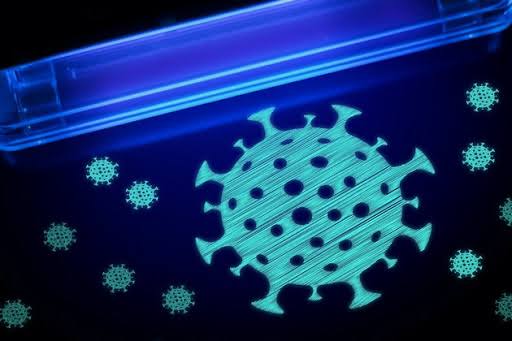
A team of researchers at Texas A&M University in the United States is preparing to test an innovative technology that could help poultry producers tackle one of the industry’s most persistent disease threats: highly pathogenic avian influenza (HPAI).
The project will investigate whether far-ultraviolet light, known as far-UVC, can reduce airborne pathogens in poultry houses without harming birds, workers or farm operations.
Testing far-UVC in poultry houses
Morgan Farnell, professor of avian microbiology and immunology and associate department head in Texas A&M’s Department of Poultry Science, said the current HPAI outbreak began around 2022 and continued to pose challenges for the poultry sector. While avian influenza is not considered endemic in the United States, the virus remains present in wildlife populations and continues to threaten commercial poultry production.
Farnell and colleague Ziteng Xu will lead the third and final phase of a multi-year research programme beginning in the spring. The work will focus on determining whether far-UVC light can reduce airborne pathogen loads inside commercial poultry houses under real-world production conditions.
Potential for safer pathogen control
Far-UVC differs from conventional germicidal ultraviolet systems because it can inactivate viruses and bacteria without penetrating deeply enough to damage human or animal skin and eyes. This characteristic has generated considerable interest among researchers, who see potential applications in occupied environments such as hospitals, schools, restaurants and livestock facilities.
Previous studies conducted by researchers from Columbia University and St. Jude Children’s Research Hospital have examined far-UVC technology in specialised isolators. Those findings laid the groundwork for testing in larger commercial-style settings. Texas A&M researchers now aim to determine whether the technology can deliver similar results in poultry houses stocked at commercial bird densities.
Measuring pathogen reduction and bird response
The trials will take place at the university’s Poultry Science Farm Complex. Researchers will use air-sampling equipment to measure indicator organisms such as aerobic bacteria, coliforms and Staphylococcus aureus before and after far-UVC exposure. These measurements will help scientists assess whether the technology could reduce pathogens associated with disease challenges including avian influenza.
Xu’s team will also investigate practical implementation issues. Poultry house dust may absorb or scatter ultraviolet light, potentially affecting performance. Researchers will therefore monitor how much radiation reaches bird-occupied areas. Artificial intelligence-based camera systems will track bird movement and behaviour, allowing scientists to evaluate any effects on welfare, circadian rhythms and growth performance.
Combining far-UVC with biosecurity measures
The project forms part of a broader effort to develop integrated biosecurity technologies. Xu is designing a system that combines far-UVC air treatment with positive-pressure ventilation and robotic floor-disinfection tools. Researchers will assess which components provide meaningful pathogen control.