
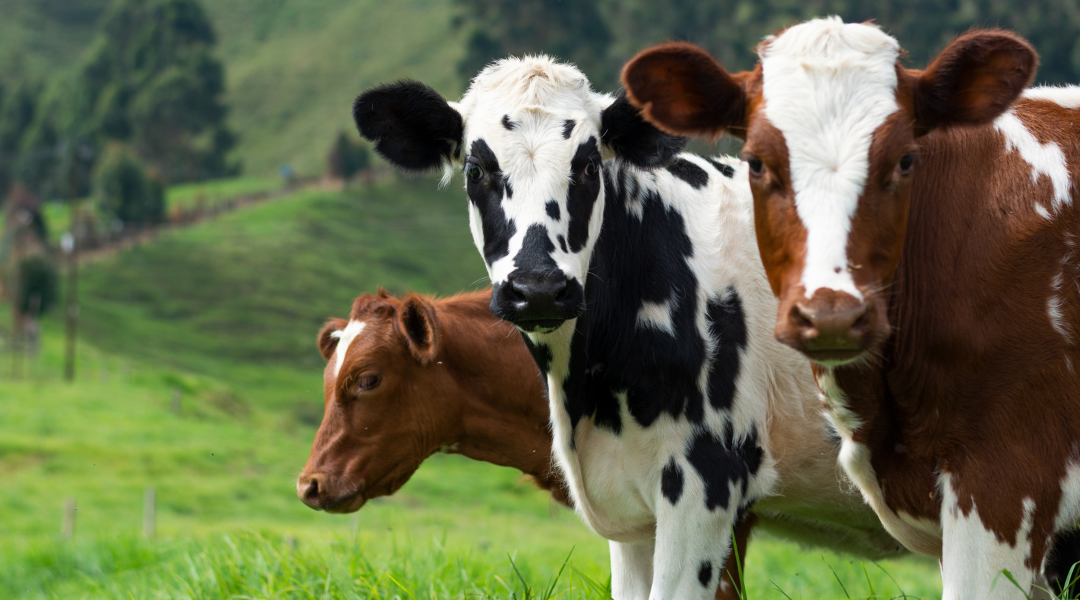
Dairy sustainability starts with good feed, but it is realised in the cow. A ration may be carefully formulated and silage may be well preserved, yet the outcome still depends on how well the cow can use that nutrition. That is why health sits at the centre of dairy sustainability.
For nutritionists, this is the key shift: health is not only a welfare outcome. It is a conversion variable. It shapes intake, digestion, milk output, replacement pressure and, ultimately, emissions intensity per kilogramme of milk.
Why health belongs at the centre
Dairy sustainability is often discussed in terms of emissions, but the farm reality is broader. If cows lose efficiency to digestive disturbance, transition stress or immune challenge, the system pays long before milk leaves the farm.
Poor health typically means:
- Lower dry matter intake.
- Impaired nutrient utilisation.
- More treatments.
- More involuntary culling.
- Less consistent output per herd.
That is why health is not separate from sustainability. It is one of the mechanisms that makes sustainability achievable and, more importantly, measurable in practice.
Why biosolutions are relevant
Biosolutions, like Bacillus probiotics, are interesting because they deliver consistent results, they are practical, as well as biological. Their nature helps them survive feed manufacture, storage and passage through the different conditions of the digestive tract without losing viability. If a live microbial is going to deliver value in commercial dairy systems, it has to be stable enough to reach the cow in a viable form.
The broader evidence in the supplied material suggests 3 plausible routes of value:
- Support for microbial balance in the rumen and lower gut.
- Support for both rumen and intestinal integrity, leading to immune resilience.
- Support for nutrient use through enzyme production and improved digestibility.
In vitro and in situ studies explain the biological potential, while in vivo cow trials demonstrate the most decision-relevant outcomes. Across the lactating-cow trials supplied, milk yield increased by 2.6% on average, while feed efficiency tended to improve by 3.7% and dry matter intake did not change overall. That is the kind of result nutritionists recognise immediately: better efficiency by producing more milk from the same input base.
Nowhere is this more obvious than in the transition period of dairy cattle. Intake is under pressure, metabolic demand is rising and immune function might be suppressed at the same time. If the cow does not adapt, the effects can carry throughout the lactation.
In one trial, cows supplemented with Bacillus probiotics from 30 days pre-calving to 60 days post-calving had higher pre and post-calving dry matter intake, higher milk yield, fat-corrected milk and lower somatic cell count than controls. The same study also showed better colostrum quality, with BRIX increasing from 23.9% to 26.5%, and higher calf serum IgG, rising from 8.4 to 14.8 mg/mL. The share of calves above the 10 mg/mL IgG benchmark increased from 20% to 70%.
For a nutritionist, that is more than a nice biological story. It is evidence that maternal performance, calf immunity and herd efficiency are linked.
What the evidence means in practice
The most useful way to read this evidence is not as a claim that one additive solves sustainability. It does not. Results will depend on diet, herd status and management context. The value is that it supports the biological conditions needed for better dairy cow efficiency.
In practical terms, the strongest sustainability message is this: by improving conversion efficiency, health can reduce emissions intensity per kilogram of milk produced. If a cow also stays longer in the herd, the system also becomes more resource-efficient.
The real question is not whether health matters. It is which interventions improve conversion efficiency without adding complexity.
For dairy nutritionists, the most useful focus remains:
- Transition support
- Gut stability
- Feed efficiency
- Nutrient utilisation
- Youngstock health that strengthens future herd productivity
A strain-level caution is also important: not all Bacillus strains behave the same. That is why scientific evidence matters on your decision.
So, what does this all mean?
Health is where sustainability becomes measurable. It is the point where feed, biology and management turn into milk, resilience and lifetime productivity. For dairy farmers, that makes health more than a management goal. It makes it the metric that tells you whether biological potential has become productive output.
When transition pressure is high, use health as your sustainability check:
- Is feed intake at the desired level through transition?
- Are cows maintaining health around calving?
- Is passive transfer adequate enough in the calf?
- Are health challenges limiting lifetime productivity and longevity in the herd?
If those answers move in the right direction, sustainability is not just being discussed. It is being delivered.