
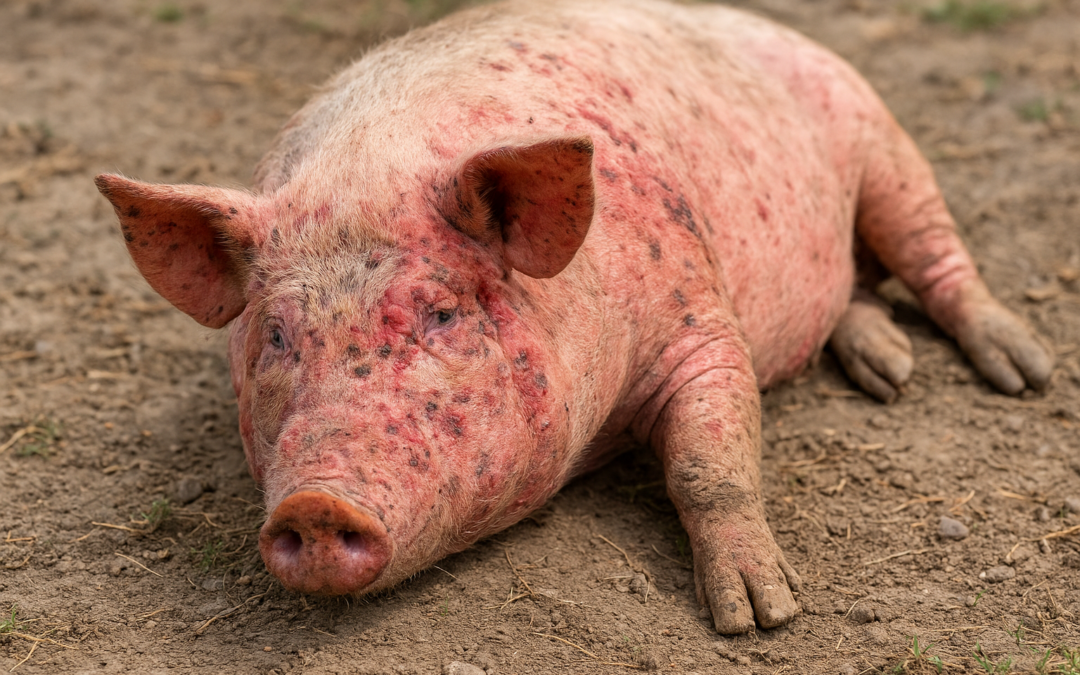
South Korea is going through a difficult phase in an attempt to get African Swine Fever (ASF) under control. In the 1st 3 months of 2026, at least 148,000 pigs had to be culled on 24 farms. In addition, almost 500 tons of feed are being destroyed in as authorities have reason to believe it was infected with the virus.
That cull rates become clear from data provided by the South Korean Ministry of Food, Agriculture and Rural Affairs (MAFRA). The majority of the recent farm outbreaks occurred on farms in the north east of the country, where the virus is also occurring in wild boar. Nevertheless, the virus also emerged on various farms in other provinces. Amongst the farms found infected with ASF in January and early February 2026, at least 4 had about 20,000 pigs on-site, explaining the relatively high cull rates.
Until 2026: 55 farms infected with ASF
Until the beginning of 2026, ASF virus had been found on 55 South Korean pig farms in total, since the virus first emerged in 2019. The year 2025 had been a relatively calm year with only 6 infections on-farm.
According to the World Organisation for Animal Health, in total South Korea has had to cull 255,202 pigs until early February 2026 due to ASF, since the beginning of the outbreaks in 2019. As the WOAH data do not include the data for most of February or March 2026, it is likely that this tally will pass the 300,000 mark shortly.
In addition to the farm outbreaks, the virus has also been found in 1,022 wild boar in 2026 so far. All of these were found in the north eastern quarter of the peninsula.
Destroying pig feed
South Korea’s news agency Yonhap reported about the destruction of more than 490 tons of feed in the fight against ASF. An epidemiological investigation by the ministry, on February 19, found ASF virus inside the ingredients and feed using porcine plasma, a digestible protein source derived from the blood of pigs. The authorities suspect blood from an infected pig was mixed in the feed. That is why it decided to discard all feed suspected to be infected, recalling feed from the manufacturer.
Dr Yanbin Shen is Asian-Pacific director of sales for APC, an international high-quality porcine protein plasma producer. In response to the events, he pointed out to Pig Progress that the ASF genetic material was detected by PCR in domestically produced porcine plasma protein.
He said, “Although ASF genetic material was later identified in compound feed at a farm in Hongseong, all carcass tests from that farm were negative. This means that the link between feed and ASF infection has not been confirmed. Most South Korean swine producers use spray‑dried plasma originating from ASF‑free countries.”
Most likely feed is not the only way how ASF virus managed to get into farms. A local South Korean agricultural magazine pointed out that there have also been reports of ASF viral material detected on workers’ hands, mobile phones and clothing (including those of foreign labourers).
Quarantine measures strengthened
In addition, Yonhap wrote that quarantine measures will have to be strengthened, at pig farms, slaughterhouses and feed production facilities. Quarantine authorities are also conducting an additional round of inspections of pig farms nationwide this week. They perform daily blood tests on pigs slaughtered at 64 slaughterhouses across the country.